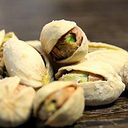
Pistachios
BLS 4.0 food: Pistachio nut (Pistazie), code H250100 · cross-reference USDA FDC #170184
Per portion (25 g)
Verified benefits — authorised EU health claims
Pistachios meets the legal condition for these claims (Regulation (EC) No 1924/2006 and (EU) No 432/2012). The numbers show exactly why.
Protein contributes to a growth in muscle mass.
Protein contributes to the maintenance of muscle mass.
Protein contributes to the maintenance of normal bones.
Replacing saturated fats in the diet with unsaturated fats contributes to the maintenance of normal blood cholesterol levels.
Vitamin E contributes to the protection of cells from oxidative stress.
Vitamin K contributes to normal blood clotting.
Show 52 more authorised claims
Vitamin K contributes to the maintenance of normal bones.
Thiamine contributes to normal energy-yielding metabolism.
Thiamine contributes to normal psychological function.
Thiamine contributes to the normal function of the heart.
Niacin contributes to normal energy-yielding metabolism.
Niacin contributes to normal psychological function.
Niacin contributes to the maintenance of normal skin.
Niacin contributes to the reduction of tiredness and fatigue.
Vitamin B6 contributes to normal psychological function.
Vitamin B6 contributes to normal red blood cell formation.
Vitamin B6 contributes to the normal function of the immune system.
Vitamin B6 contributes to the reduction of tiredness and fatigue.
Vitamin B6 contributes to the regulation of hormonal activity.
Biotin contributes to normal psychological function.
Biotin contributes to the maintenance of normal hair.
Biotin contributes to the maintenance of normal skin.
Folate contributes to maternal tissue growth during pregnancy.
Folate contributes to normal blood formation.
Folate contributes to normal psychological function.
Folate contributes to the normal function of the immune system.
Folate contributes to the reduction of tiredness and fatigue.
Folate has a role in the process of cell division.
Calcium is needed for the maintenance of normal bones.
Calcium is needed for the maintenance of normal teeth.
Calcium contributes to normal muscle function.
Calcium contributes to normal blood clotting.
Magnesium contributes to a reduction of tiredness and fatigue.
Magnesium contributes to normal muscle function.
Magnesium contributes to normal psychological function.
Magnesium contributes to normal protein synthesis.
Magnesium contributes to the maintenance of normal bones.
Phosphorus contributes to the maintenance of normal bones.
Iron contributes to normal cognitive function.
Iron contributes to normal formation of red blood cells and haemoglobin.
Iron contributes to normal oxygen transport in the body.
Iron contributes to the normal function of the immune system.
Iron contributes to the reduction of tiredness and fatigue.
Zinc contributes to normal cognitive function.
Zinc contributes to normal fertility and reproduction.
Zinc contributes to the maintenance of normal testosterone levels in the blood.
Zinc contributes to the maintenance of normal bones.
Zinc contributes to the maintenance of normal hair.
Zinc contributes to the maintenance of normal nails.
Zinc contributes to the maintenance of normal skin.
Zinc contributes to the maintenance of normal vision.
Zinc contributes to the normal function of the immune system.
Copper contributes to maintenance of normal connective tissues.
Copper contributes to normal hair pigmentation.
Copper contributes to normal iron transport in the body.
Copper contributes to the normal function of the immune system.
Manganese contributes to the maintenance of normal bones.
Manganese contributes to the normal formation of connective tissue.
Goals this food supports
Full nutrient profile
Values per 100 g edible portion as published by the Max Rubner-Institut (BLS 4.0, 10.25826/Data20251217-134202-0). "Origin" is the MRI's own data-provenance label; open "reference" for the underlying study or database. %NRV = share of the EU Nutrient Reference Value (Reg. (EU) 1169/2011, Annex XIII).
Energy & macronutrients
| Nutrient | per 100 g | per 25 g | %NRV | Origin |
|---|---|---|---|---|
| Energy | 599 kcal | 150 kcal | BLS ENERCC · Calculated by formula | |
| Protein | 20.8 g | 5.2 g | BLS PROT625 · Other nutrient databasereferenceConverted value from: Kirchhoff, E; Souci - Fachmann - Kraut - Die Zusammensetzung der Lebensmittel - Nährwert-Tabellen; 2008; 7 | |
| Fat | 51.6 g | 12.9 g | BLS FAT · Other nutrient databasereferenceKirchhoff, E; Souci - Fachmann - Kraut - Die Zusammensetzung der Lebensmittel - Nährwert-Tabellen; 2008; 7 | |
| Carbohydrate (available) | 7.6 g | 1.9 g | BLS CHO · Calculated by formula | |
| Sugars (total) | 6.6 g | 1.7 g | BLS SUGAR · Calculated by formula | |
| starch | 0.96 g | 0.24 g | BLS STARCH · Übernommener Wert | |
| Dietary fibre | 10.6 g | 2.7 g | BLS FIBT · Other nutrient databasereferenceConverted value from: Kirchhoff, E; Souci - Fachmann - Kraut - Die Zusammensetzung der Lebensmittel - Nährwert-Tabellen; 2008; 7 | |
| fibreSoluble | 0.31 g | 0.08 g | BLS FIBSOL · Other nutrient databasereferenceKirchhoff, E; Souci - Fachmann - Kraut - Die Zusammensetzung der Lebensmittel - Nährwert-Tabellen; 2008; 7 | |
| Water | 5.9 g | 1.5 g | BLS WATER · Other nutrient databasereferenceKirchhoff, E; Souci - Fachmann - Kraut - Die Zusammensetzung der Lebensmittel - Nährwert-Tabellen; 2008; 7 | |
| Salt | 0.73 g | 0.18 g | BLS NACL · Calculated by formula |
Fats & fatty acids
| Nutrient | per 100 g | per 25 g | %NRV | Origin |
|---|---|---|---|---|
| Saturated fat | 6.1 g | 1.5 g | BLS FASAT · Calculated by formula | |
| Monounsaturated fat | 34.6 g | 8.6 g | BLS FAMS · Calculated by formula | |
| Polyunsaturated fat | 7.6 g | 1.9 g | BLS FAPU · Calculated by formula | |
| Omega-3 fatty acids (total) | 0.2 g | 0.05 g | BLS FAPUN3 · Calculated by formula | |
| Alpha-linolenic acid (ALA, omega-3) | 0.2 g | 0.05 g | BLS F18:3CN3 · Other nutrient databasereferenceKirchhoff, E; Souci - Fachmann - Kraut - Die Zusammensetzung der Lebensmittel - Nährwert-Tabellen; 2008; 7 | |
| EPA | 0 mg | 0 mg | BLS F20:5CN3 · Logische Null | |
| DHA | 0 mg | 0 mg | BLS F22:6CN3 · Logische Null | |
| EPA + DHA (long-chain omega-3) | 0 mg | 0 mg | BLS | |
| omega6 | 7.4 g | 1.9 g | BLS FAPUN6 · Calculated by formula | |
| Linoleic acid (omega-6) | 7.4 g | 1.9 g | BLS F18:2CN6 · Other nutrient databasereferenceKirchhoff, E; Souci - Fachmann - Kraut - Die Zusammensetzung der Lebensmittel - Nährwert-Tabellen; 2008; 7 | |
| Oleic acid | 33.9 g | 8.5 g | BLS F18:1CN9 · Other nutrient databasereferenceKirchhoff, E; Souci - Fachmann - Kraut - Die Zusammensetzung der Lebensmittel - Nährwert-Tabellen; 2008; 7 | |
| Cholesterol | 0.5 mg | 0.13 mg | BLS CHORL · Übernommener Wert |
Vitamins
| Nutrient | per 100 g | per 25 g | %NRV | Origin |
|---|---|---|---|---|
| Vitamin A | 12 µg | 3 µg | 2 % | BLS VITAA · Calculated by formula |
| Vitamin D | 0 µg | 0 µg | 0 % | BLS VITD · Calculated by formula |
| Vitamin E | 5.2 mg | 1.3 mg | 43 % | BLS VITE · Other nutrient databasereferenceConverted value from: Kirchhoff, E; Souci - Fachmann - Kraut - Die Zusammensetzung der Lebensmittel - Nährwert-Tabellen; 2008; 7 |
| Vitamin K | 13.2 µg | 3.3 µg | 18 % | BLS VITK · Calculated by formula |
| Vitamin C | 7 mg | 1.8 mg | 9 % | BLS VITC · Other nutrient databasereferenceKirchhoff, E; Souci - Fachmann - Kraut - Die Zusammensetzung der Lebensmittel - Nährwert-Tabellen; 2008; 7 |
| Thiamin (vitamin B1) | 0.69 mg | 0.17 mg | 63 % | BLS THIA · Other nutrient databasereferenceKirchhoff, E; Souci - Fachmann - Kraut - Die Zusammensetzung der Lebensmittel - Nährwert-Tabellen; 2008; 7 |
| Riboflavin (vitamin B2) | 0.2 mg | 0.05 mg | 14 % | BLS RIBF · Other nutrient databasereferenceKirchhoff, E; Souci - Fachmann - Kraut - Die Zusammensetzung der Lebensmittel - Nährwert-Tabellen; 2008; 7 |
| Niacin (vitamin B3) | 6.5 mg | 1.6 mg | 41 % | BLS NIAEQ · Calculated by formula |
| Pantothenic acid (vitamin B5) | 0.62 mg | 0.15 mg | 10 % | BLS PANTAC · Übernommener Wert |
| Vitamin B6 | 1.5 mg | 0.38 mg | 107 % | BLS VITB6 · Übernommener Wert |
| Biotin | 17 µg | 4.3 µg | 34 % | BLS BIOT · Übernommener Wert |
| Folate | 58 µg | 14.5 µg | 29 % | BLS FOL · Calculated by formula |
| Vitamin B12 | 0 µg | 0 µg | 0 % | BLS VITB12 · Logische Null |
Minerals & trace elements
| Nutrient | per 100 g | per 25 g | %NRV | Origin |
|---|---|---|---|---|
| Sodium | 291 mg | 72.8 mg | BLS NA · Scientific literaturereferenceConverted value from: Tošić, S. B., S. S. Mitić, D. S. Velimirović, G. S. Stojanović, A. N. Pavlović and E. T. Pecev-Marinković; Elemental composition of edible nuts: fast optimization and validation procedure of an ICP-OES method.; Journal of the Science of Food and Agriculture; 2015; 95; 11 | |
| Potassium | 5.6 mg | 1.4 mg | 0 % | BLS K · Scientific literaturereferenceConverted value from: Tošić, S. B., S. S. Mitić, D. S. Velimirović, G. S. Stojanović, A. N. Pavlović and E. T. Pecev-Marinković; Elemental composition of edible nuts: fast optimization and validation procedure of an ICP-OES method.; Journal of the Science of Food and Agriculture; 2015; 95; 11 |
| Calcium | 129 mg | 32.3 mg | 16 % | BLS CA · Scientific literaturereferenceConverted value from: Tošić, S. B., S. S. Mitić, D. S. Velimirović, G. S. Stojanović, A. N. Pavlović and E. T. Pecev-Marinković; Elemental composition of edible nuts: fast optimization and validation procedure of an ICP-OES method.; Journal of the Science of Food and Agriculture; 2015; 95; 11 |
| Magnesium | 183 mg | 45.6 mg | 49 % | BLS MG · Scientific literaturereferenceConverted value from: Tošić, S. B., S. S. Mitić, D. S. Velimirović, G. S. Stojanović, A. N. Pavlović and E. T. Pecev-Marinković; Elemental composition of edible nuts: fast optimization and validation procedure of an ICP-OES method.; Journal of the Science of Food and Agriculture; 2015; 95; 11 |
| Phosphorus | 500 mg | 125 mg | 71 % | BLS P · Other nutrient databasereferenceKirchhoff, E; Souci - Fachmann - Kraut - Die Zusammensetzung der Lebensmittel - Nährwert-Tabellen; 2008; 7 |
| Iron | 6.9 mg | 1.7 mg | 49 % | BLS FE · Scientific literaturereferenceConverted value from: Tošić, S. B., S. S. Mitić, D. S. Velimirović, G. S. Stojanović, A. N. Pavlović and E. T. Pecev-Marinković; Elemental composition of edible nuts: fast optimization and validation procedure of an ICP-OES method.; Journal of the Science of Food and Agriculture; 2015; 95; 11 |
| Zinc | 2.9 mg | 0.72 mg | 29 % | BLS ZN · Aggregated from several sourcesreferenceConverted value from: BVL; Lebensmittel Monitoring 2007; 2007 Converted value from: Tošić, S. B., S. S. Mitić, D. S. Velimirović, G. S. Stojanović, A. N. Pavlović and E. T. Pecev-Marinković; Elemental composition of edible nuts: fast optimization and validation procedure of an ICP-OES method.; Journal of the Science of Food and Agriculture; 2015; 95; 11 |
| Iodine | 0 µg | 0 µg | 0 % | BLS ID · Übernommener Wert |
| Selenium | 7 µg | 1.8 µg | 13 % | USDA FDC 170184 |
| Copper | 1.2 mg | 0.3 mg | 119 % | BLS CU · Aggregated from several sourcesreferenceConverted value from: Tošić, S. B., S. S. Mitić, D. S. Velimirović, G. S. Stojanović, A. N. Pavlović and E. T. Pecev-Marinković; Elemental composition of edible nuts: fast optimization and validation procedure of an ICP-OES method.; Journal of the Science of Food and Agriculture; 2015; 95; 11 Converted value from: BVL; Lebensmittel Monitoring 2007; 2007 |
| Manganese | 1.2 mg | 0.31 mg | 62 % | BLS MN · Scientific literaturereferenceConverted value from: Tošić, S. B., S. S. Mitić, D. S. Velimirović, G. S. Stojanović, A. N. Pavlović and E. T. Pecev-Marinković; Elemental composition of edible nuts: fast optimization and validation procedure of an ICP-OES method.; Journal of the Science of Food and Agriculture; 2015; 95; 11 |
Essential amino acids
| Nutrient | per 100 g | per 25 g | %NRV | Origin |
|---|---|---|---|---|
| Histidine | 0.46 g | 0.12 g | BLS HIS · Musterberechnung | |
| Isoleucine | 0.81 g | 0.2 g | BLS ILE · Musterberechnung | |
| Leucine | 1.4 g | 0.36 g | BLS LEU · Musterberechnung | |
| Lysine | 0.99 g | 0.25 g | BLS LYS · Musterberechnung | |
| Methionine | 0.31 g | 0.08 g | BLS MET · Musterberechnung | |
| Phenylalanine | 0.99 g | 0.25 g | BLS PHE · Musterberechnung | |
| Threonine | 0.63 g | 0.16 g | BLS THR · Musterberechnung | |
| Tryptophan | 0.3 g | 0.08 g | BLS TRP · Musterberechnung | |
| Valine | 1.1 g | 0.28 g | BLS VAL · Musterberechnung |
Sources
- Bundeslebensmittelschlüssel (BLS) 4.0 — German Nutrient Database — Max Rubner-Institut
- FoodData Central — USDA Agricultural Research Service
- Commission Regulation (EU) No 432/2012 — list of permitted health claims (consolidated) — European Union (EUR-Lex)
- Regulation (EC) No 1924/2006 on nutrition and health claims (incl. Annex: conditions for "source of" claims) — European Union (EUR-Lex)
- Regulation (EU) No 1169/2011 on food information (Annex XIII: Nutrient Reference Values; Art. 7(3)) — European Union (EUR-Lex)
- EU Register of nutrition and health claims made on foods — European Commission
- Vitamin E — fact sheet for health professionals — NIH Office of Dietary Supplements
- Vitamin K — fact sheet for health professionals — NIH Office of Dietary Supplements
- Thiamin — fact sheet for health professionals — NIH Office of Dietary Supplements
- Niacin — fact sheet for health professionals — NIH Office of Dietary Supplements
- Vitamin B6 — fact sheet for health professionals — NIH Office of Dietary Supplements
- Biotin — fact sheet for health professionals — NIH Office of Dietary Supplements
- Folate — fact sheet for health professionals — NIH Office of Dietary Supplements
- Calcium — fact sheet for health professionals — NIH Office of Dietary Supplements
- Magnesium — fact sheet for health professionals — NIH Office of Dietary Supplements
- Phosphorus — fact sheet for health professionals — NIH Office of Dietary Supplements
- Iron — fact sheet for health professionals — NIH Office of Dietary Supplements
- Zinc — fact sheet for health professionals — NIH Office of Dietary Supplements
- Copper — fact sheet for health professionals — NIH Office of Dietary Supplements
- Manganese — fact sheet for health professionals — NIH Office of Dietary Supplements
Max Rubner-Institut (2025): Bundeslebensmittelschlüssel (BLS), Version 4.0 — Deutsche Nährstoffdatenbank. Karlsruhe. DOI: 10.25826/Data20251217-134202-0. Licence CC BY 4.0. Selenium and choline: U.S. Department of Agriculture, Agricultural Research Service. FoodData Central: SR Legacy, 2018. fdc.nal.usda.gov.