Carbohydrates: what it does & best food sources
What it is
Carbohydrates help provide energy for your body. They come as sugars (fruit and dairy naturally; candy, baked goods and soda as added sugar), starches (beans, potatoes, corn, peas and whole grains such as brown rice, oats and barley) and fibre. NIH MedlinePlus
Prioritize fibre-rich whole grains and significantly reduce highly processed, refined carbohydrates such as white bread and packaged breakfast foods. USDA
How much do adults need?
- US Recommended Dietary Allowance 130 g a day for adults; 45–65 % of daily calories (US National Academies). US National Academies (DRIs)
- US label FDA Daily Value: 275 g. FDA
Most per portion
| Food | Portion | Carbohydrates | % US DV |
|---|---|---|---|
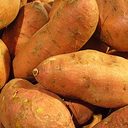 Sweet potato | 200 g | 50.4 g | 18 % |
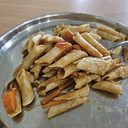 Wholemeal pasta, boiled | 180 g | 40.7 g | 15 % |
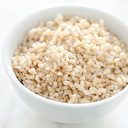 Brown rice, boiled | 150 g | 39.5 g | 14 % |
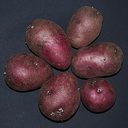 Potato, unpeeled | 200 g | 36.9 g | 13 % |
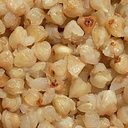 Buckwheat groats (dry) | 60 g | 36.7 g | 13 % |
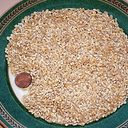 Pearl barley, boiled | 150 g | 34.4 g | 12 % |
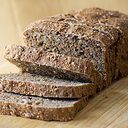 Wholemeal bread | 80 g | 30.4 g | 11 % |
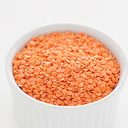 Red lentils (dry) | 60 g | 29.3 g | 11 % |
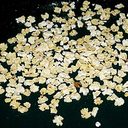 Millet wholegrain flakes | 40 g | 27 g | 10 % |
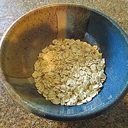 Oat flakes (rolled oats) | 50 g | 26.6 g | 10 % |
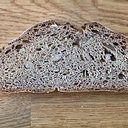 Wholemeal rye bread | 80 g | 26 g | 9 % |
 Quinoa, boiled | 150 g | 25.4 g | 9 % |
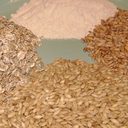 Barley flakes | 40 g | 25 g | 9 % |
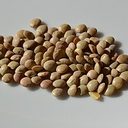 Lentils, boiled | 150 g | 23.3 g | 8 % |
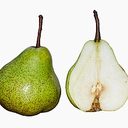 Pear | 150 g | 19.7 g | 7 % |
Per normal portion. Values from BLS 4.0. % US DV = share of the FDA Daily Value.
Sources
- Carbohydrates — NIH MedlinePlus (National Library of Medicine)
- Dietary Guidelines for Americans, 2025–2030 — U.S. Departments of Agriculture and Health & Human Services
- Dietary Reference Intakes — reference values for macronutrients (tables published by Health Canada) — US National Academies (DRIs)
- Daily Value on the Nutrition and Supplement Facts labels — US Food and Drug Administration
- Bundeslebensmittelschlüssel (BLS) 4.0 — German Nutrient Database — Max Rubner-Institut