Riboflavin (vitamin B2): what it does & best food sources
What it does — EU-authorised health claims
Riboflavin contributes to normal energy-yielding metabolism.
Riboflavin contributes to the maintenance of normal red blood cells.
Riboflavin contributes to the maintenance of normal skin.
Riboflavin contributes to the maintenance of normal vision.
Riboflavin contributes to the normal metabolism of iron.
Riboflavin contributes to the reduction of tiredness and fatigue.
Wording as authorised in Regulation (EU) No 432/2012 EUR-LexEU Commission
How much do adults need?
| Age | Men | Women |
|---|---|---|
| 19–30 | 1.3 mg | 1.1 mg |
| 31–50 | 1.3 mg | 1.1 mg |
| 51–70 | 1.3 mg | 1.1 mg |
| 71+ | 1.3 mg | 1.1 mg |
- US Recommended Dietary Allowance / Adequate Intake (US National Academies), as published by NIH ODS — see the table above. NIH ODS
- US label FDA Daily Value: 1.3 mg. On a US food label, 5 % DV or less per serving is low and 20 % or more is high. FDA
- EU label EU Nutrient Reference Value: 1.4 mg. EUR-Lex
Best food sources (per portion)
| Food | Portion | Riboflavin (vitamin B2) | % US DV | % EU NRV |
|---|---|---|---|---|
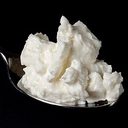 Low-fat quark | 150 g | 0.73 mg | 57 % | 53 % |
 Eggs, boiled | 120 g (2 eggs) | 0.56 mg | 43 % | 40 % |
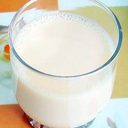 Soya drink, fortified | 250 g | 0.53 mg | 40 % | 38 % |
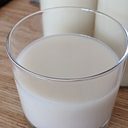 Oat drink, fortified | 250 g | 0.53 mg | 40 % | 38 % |
 Skyr | 150 g | 0.41 mg | 31 % | 29 % |
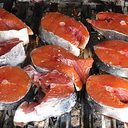 Salmon | 125 g | 0.38 mg | 29 % | 27 % |
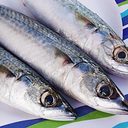 Mackerel | 125 g | 0.38 mg | 29 % | 27 % |
 Kefir, low-fat | 200 g | 0.35 mg | 27 % | 25 % |
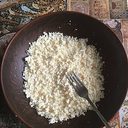 Cottage cheese | 150 g | 0.34 mg | 27 % | 25 % |
 Milk, 1.5% fat | 250 g | 0.34 mg | 26 % | 24 % |
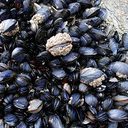 Mussels | 150 g | 0.33 mg | 25 % | 24 % |
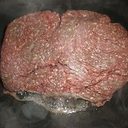 Beef mince, lean | 125 g | 0.33 mg | 25 % | 23 % |
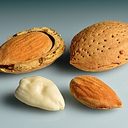 Almonds | 25 g | 0.3 mg | 23 % | 22 % |
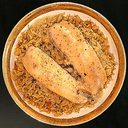 Herring | 125 g | 0.29 mg | 22 % | 21 % |
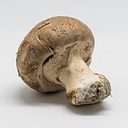 Button mushrooms | 100 g | 0.28 mg | 22 % | 20 % |
Per normal portion. Values from BLS 4.0. % US DV = share of the FDA Daily Value. % EU NRV = share of the EU Nutrient Reference Value.
Sources
- Riboflavin — fact sheet for health professionals — NIH Office of Dietary Supplements
- Daily Value on the Nutrition and Supplement Facts labels — US Food and Drug Administration
- Regulation (EU) No 1169/2011 on food information (Annex XIII: Nutrient Reference Values; Art. 7(3)) — European Union (EUR-Lex)
- Commission Regulation (EU) No 432/2012 — list of permitted health claims (consolidated) — European Union (EUR-Lex)
- EU Register of nutrition and health claims made on foods — European Commission
- Bundeslebensmittelschlüssel (BLS) 4.0 — German Nutrient Database — Max Rubner-Institut